
Flatbed Load Securement and Oversize Permits: What Shippers Need to Have Ready
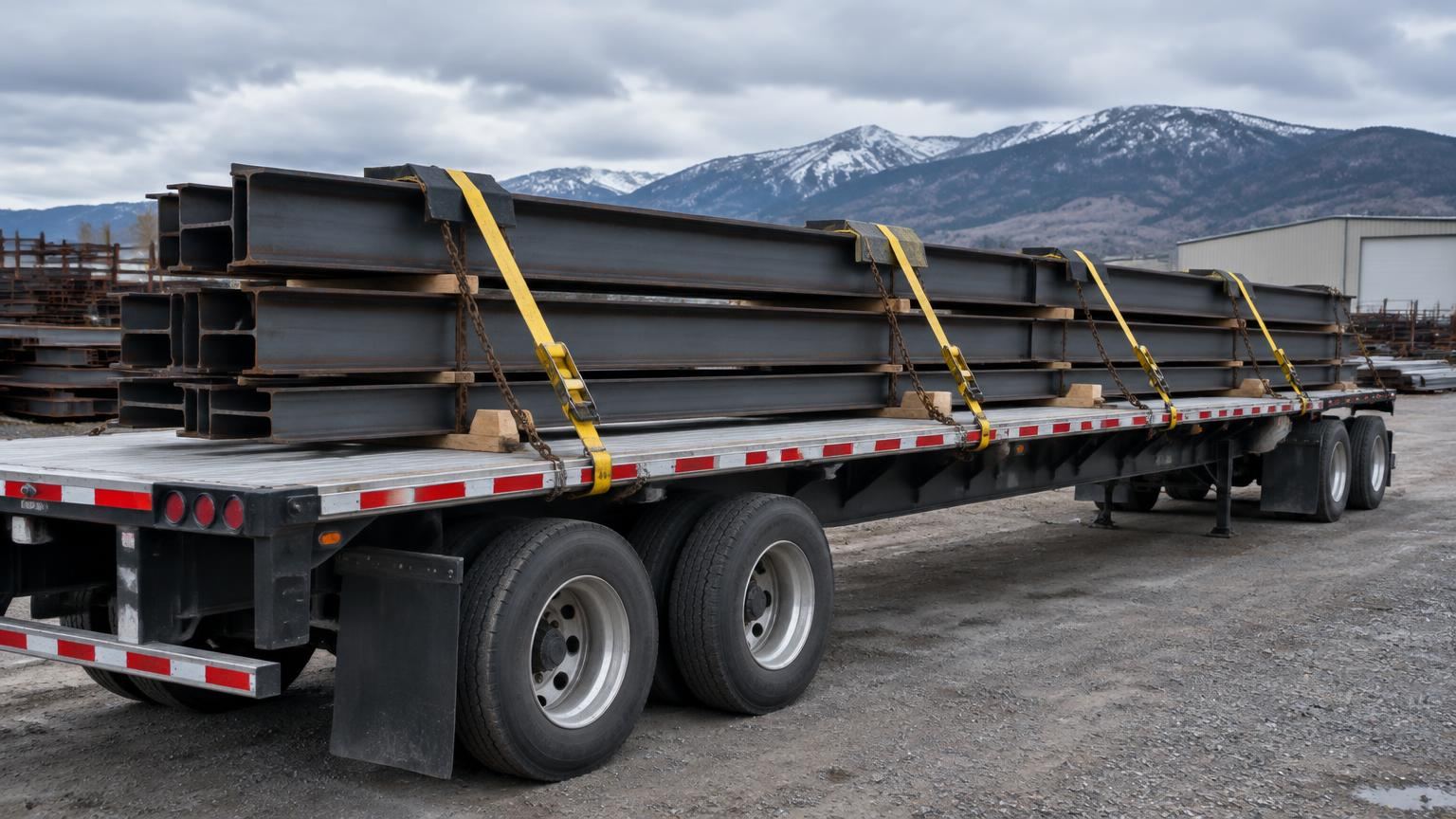
Flatbed load securement and permits start with accurate loaded dimensions, weight, cargo details, and a clear loading plan. Tell your broker about edges, tarping, lifting equipment, and any overhang before a truck is chosen. Our freight services include flatbed transportation for cargo that cannot move in an enclosed trailer.
Open-deck freight requires more than a trailer reservation. A carrier must evaluate how the load will be restrained, whether it needs protection from weather, and whether its loaded size or weight affects routing. The shipper knows the freight and the site. Sharing precise information early lets the broker discuss a workable plan with the carrier.
What does load securement mean for the shipper?
Load securement is the plan for keeping freight stable on the trailer during transport. FMCSA cargo securement rules apply to the carrier's movement, while the shipper supplies accurate cargo information and explains handling restrictions. Confirm who loads and who secures the freight before pickup, rather than assuming the driver can perform every task.
Describe each piece's shape, weight, packaging, sharp edges, and center of gravity if known. Point out surfaces that cannot bear pressure from straps or chains. A carrier decides on compliant securement for the actual load, but cannot assess hidden cargo characteristics the shipper failed to describe. Send photos and a loading diagram when the freight is unusual.
Ask how the trailer will be accessed at your facility. A forklift-ready yard is different from a crane-only loading bay. The loading team and carrier should agree on where the trailer can park, how the freight is lifted, and when a final securement check can happen. Do not alter the piece count after tendering without informing the broker.
When are chains, straps, and edge protection relevant?
Chains and straps are common securement tools, but the right approach depends on the freight, contact points, and applicable rules. Tell the broker about sharp edges, delicate surfaces, or components that may shift. Ask the carrier to evaluate suitable restraints and edge protectors before arriving, with the actual cargo description in hand.
Chains may suit some heavy or hard-edged items, while straps may suit loads where the contact surface and restraint method allow them. Neither is a universal answer. Protect edges where a restraint could be damaged or where the cargo could be marked. If a manufacturer provides lifting or tie-down guidance, send it with the shipment details.
Blocking and bracing may be needed to prevent movement between pieces or across the deck. Say whether dunnage, supports, or special contact points are part of your prepared load. Confirm who supplies those materials. A photograph of a similar load may help explain the plan, but measurements and the current cargo details must still be checked.
How should you plan tarping and weather protection?
Specify which surfaces must remain dry or protected from road exposure, then tell the broker whether tarping is required. A tarp request affects equipment and the pickup plan. Identify the cargo areas that need cover and any surfaces that cannot have a tarp or restraint resting on them.
Ask whether there is a safe place to tarp at pickup and whether the facility has restrictions on working around a loaded trailer. The carrier should confirm it has the appropriate tarps and a way to secure them. If your freight is packaged for outdoor exposure, say so rather than relying on an assumption from the commodity name.
Weather conditions can change during a route. Agree on protection based on the product's requirements, not only on the departure forecast. Tell the broker if a covering must be removed for unloading and whether the receiver has the space and equipment to do it. Clear receiving instructions matter as much as the pickup plan.
When might a flatbed load need oversize or overweight permits?
A load may require permits when its loaded dimensions or weight exceed limits on the route it will travel. States issue permits and their requirements vary. Give the broker full measurements, total weight, origin, destination, and possible route restrictions so the carrier can evaluate requirements before committing to pickup.
Do not assume that cargo fitting on the trailer means it can legally move on every road. Width, height, length, weight distribution, and any overhang may matter. The carrier needs the measurements of the load as it will travel, including packaging and supports, not just the bare product. Discuss a change in configuration before dispatch.
Permit conditions are route-specific. A shipment crossing state lines may face different rules as it moves. Ask the broker and carrier who will arrange and confirm any necessary permits before the truck arrives. Do not quote an escort threshold or a permit fee based on a previous shipment; those details need to be checked for this load.
The truck type comparison helps explain when an open deck is appropriate. Choosing a flatbed is only the first decision. If the freight is unusual, share photographs from multiple angles and identify any piece that extends beyond the others. Give the broker time to discuss suitable equipment and routing with the carrier.
What details should you send for a flatbed quote?
Send loaded measurements, actual weight, piece count, loading method, and pickup and delivery site details. Add tarping, surface protection, and lifting equipment requirements. A broker can coordinate a suitable carrier only when those details reflect the shipment that will be waiting at the dock, rather than an earlier estimate.
| What to send for a flatbed quote | Detail to provide | Why it matters |
|---|---|---|
| Dimensions | Loaded length, width, height and overhang | Supports equipment and permit review |
| Weight | Total and distribution across pieces | Supports trailer and route planning |
| Piece count | Number, shapes and packaging | Helps plan securement and loading |
| Loading method | Forklift, crane or other method | Confirms how freight reaches the deck |
| Tarp needs | Surfaces to protect and covering instructions | Helps match carrier equipment |
| Pickup and delivery sites | Addresses, appointments and access notes | Helps plan arrival and unloading |
| Crane or forklift availability | Equipment available at each site | Avoids an unloading mismatch |
Send the dimensions as a loaded configuration. For example, include any supports or packaging that change the height or width. If several pieces will travel together, explain how they will be placed and whether each has a separate lifting point. Ask your facility contact to verify that the supplied measurements match the actual prepared freight.
How do you avoid a surprise at pickup or delivery?
Review the cargo description with the loading team, broker, and receiver before dispatch. Confirm that both sites can handle the agreed loading method and that the carrier has the required securement and weather protection. If weight, dimensions, or piece count changes, stop and update the movement plan before the truck arrives.
Check whether the receiver has a crane or forklift that can handle the pieces and reach the trailer where it will be parked. Confirm appointments and any gate restrictions. A site that can unload a dry van may not have space for an open-deck trailer or a heavy lift. Share the receiving contact so dispatch can resolve questions early.
For a comparison with temperature-controlled freight, read the reefer freight shipping guide. For this open-deck shipment, request a flatbed freight quote with your measurements and loading notes or call 720-502-6479.
Frequently asked questions
- Who is responsible for securing a flatbed load?
- Confirm loading and securement responsibilities before pickup. The carrier must evaluate how to comply with applicable cargo securement rules for the actual freight.
- Are chains or straps better for steel beams?
- The carrier must select a compliant approach for the actual cargo and contact points. Share weights, edges, and any manufacturer handling guidance.
- When do I need an oversize permit?
- Permit needs depend on the loaded dimensions, weight, route, and applicable state requirements. Provide full measurements for a route-specific review.
- Should I request tarping for a flatbed shipment?
- State your cargo's weather protection needs in the quote request so the broker can confirm suitable equipment with the carrier.
- What measurements should I send?
- Provide the length, width, height, and weight of the shipment as it will ride on the trailer, including packaging, supports, and overhang.
- What if the load changes before pickup?
- Tell the broker before dispatch so the carrier can reconsider equipment, securement, routing, and any permit needs.
Related Articles
Carrier Setup With a Freight Broker: What to Have Ready to Haul Your First Load
A carrier-facing guide to broker registration, authority and insurance checks, equipment details, preferred lanes and dispatch contacts.
Read more →Flatbed Load Securement: What Shippers Should Know Before Pickup
Prepare flatbed freight with accurate dimensions, loading plans, tarping instructions and clear securement responsibilities.
Read more →Refrigerated Freight Shipping Checklist: What to Send Before You Book a Reefer
A practical shipper checklist for temperature setpoints, pre-cooling, dock appointments, seals and rejected reefer deliveries.
Read more →